"Can you show me the return on our investment?"
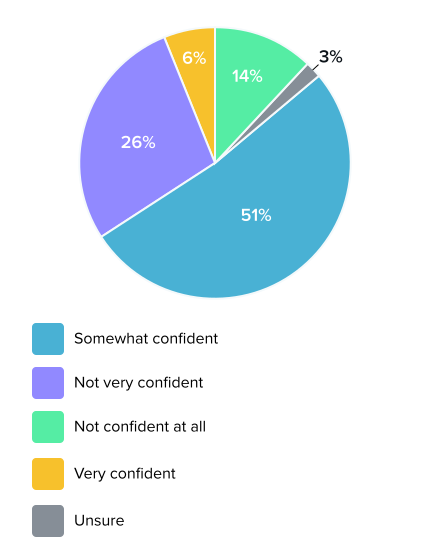
That’s one of the main questions leadership is asking of their campus recruiting teams today. The gap between leadership expectations and reality is the defining challenge of 2026, and it’s reshaping how campus teams plan and operate. Only 6% of the teams we surveyed feel very confident in their ability to accurately measure ROI.
For many years, the success of campus recruiting has been measured by activity. Employers would look at the number of events they attended, how many resumes they collected, and how many candidates they met at career fairs. With increasing budget pressure, focusing on activity isn’t cutting it. Does attending 150 (or in many cases, more) campus events really matter if only 50 of them lead to quality hires? More and more, early talent teams are asking that and similar questions, leading to a shift in how they plan, invest, and measure the success of their programs.
Instead of relying on touchpoints and volume to gauge performance, teams are focusing on outcomes. They’re looking at which campus visits and events actually produce offers. Which channels lead to hires that stick around. Which events fill the pipeline with qualified candidates, and conversely, which events drain their budget and time without producing. With the right data, campus teams can focus their efforts where it matters most and reinvest in the channels and events that have proven value. But as the survey results show, most teams don’t have the data they need to prove the ROI of their programs.
To understand how teams are navigating this moment, we surveyed early talent professionals across various industries and organization sizes. The fundamentals of campus recruiting haven’t changed — but the expectations around proving it have.
AI and Application Volume
More applications, more noise, more opportunity.
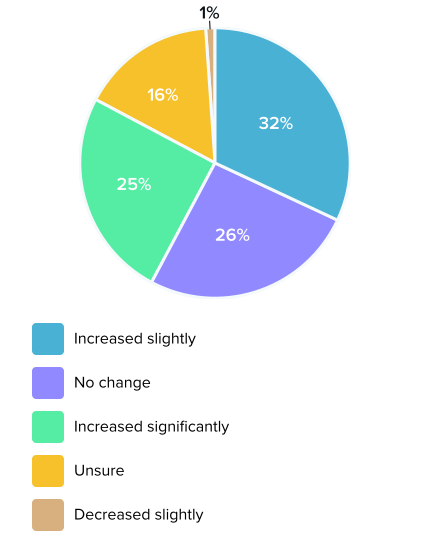
The majority of respondents say AI-assisted tools have increased their application volume, but more volume hasn’t produced better candidates. Instead, it’s created more admin work for recruiters.
How has the rise of AI-assisted tools (resume builders, autofill, mass-apply bots) impacted your application volume this year?
How frequently do you encounter candidates who misrepresent skills or experience due to AI-generated application materials?
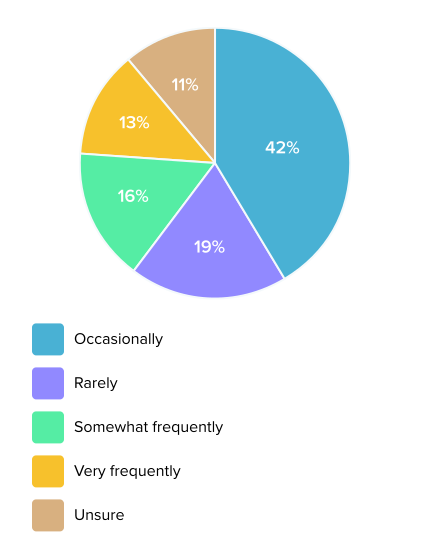
Most respondents say fewer than half their applicants are qualified to move forward, and the majority encounter AI-generated misrepresentation in candidate materials. Teams are spending more time filtering out unqualified candidates and less time engaging the ones who are actually a good fit.
<25%
of applicants are qualified to move forward, according to the majority of respondents
Please fill out the form below to continue reading the 2026 State of Campus Recruiting Report.
What percentage of your early-talent applicants are qualified enough to move forward?
And yet, early talent teams are just scratching the surface of what AI could do for them. Right now, AI use is concentrated in sourcing and candidate communications.
In which parts of your campus recruiting process do you currently leverage AI?
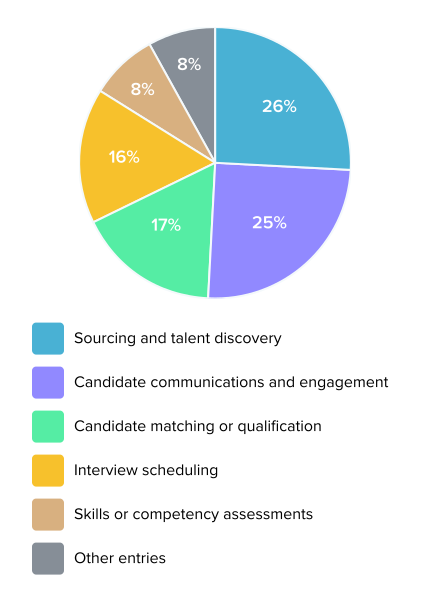
In your opinion, what parts of your campus recruiting process could see the most positive impact from AI?
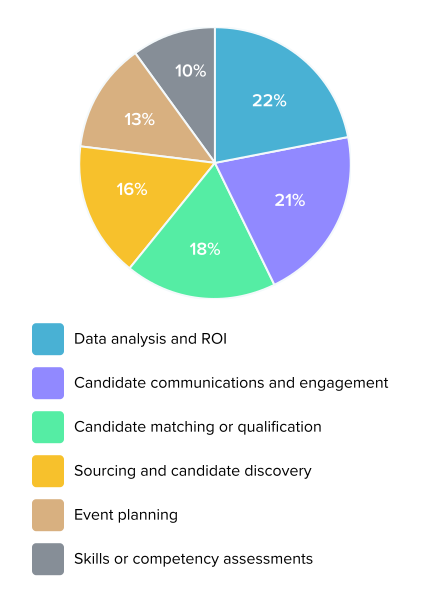
Early talent teams are just scratching the surface of what AI can do for them.
Other opportunities lie in the parts of recruiting that strain teams most, like surfacing best-fit candidates from bloated applicant pools, automating scheduling and follow-up, and helping recruiters prioritize high-intent students. That’s where purpose-built AI that’s designed specifically for the volume, pace, and complexity of campus recruiting can move the needle.
Data and ROI
The pressure is real, but the infrastructure hasn't caught up yet.
93% of respondents said their event goals have changed compared to previous years, and more than half say leadership pressure to demonstrate ROI has increased. Leadership isn’t asking vague questions, either — internship conversion rates and offer acceptance rates top the list of metrics executives care about most.
6%
Only 6% of teams feel very confident in their ability to accurately measure ROI — despite it being leadership's top priority.
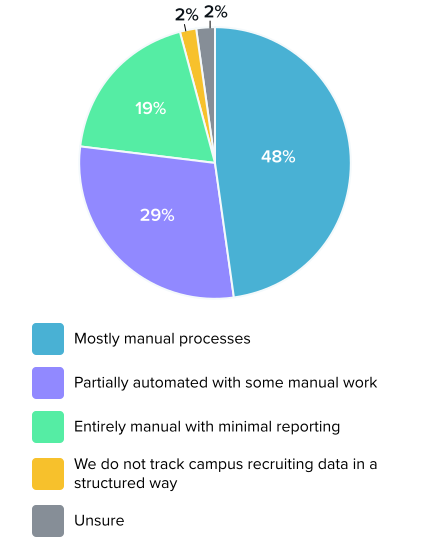
How would you describe your team's ability to collect and report campus recruiting data?
How confident are you that you can accurately measure the ROI of campus recruiting activities?
93%
say their goals for campus and early-talent events have changed in the past year — signaling a broad shift from activity-based to outcome-based planning.
Which metrics are most important to leadership when evaluating campus recruiting performance?
Compared to last year, how has pressure from leadership to demonstrate ROI changed?
2 in 3
teams are still relying on manual processes to collect and report their data — the gap between what leadership expects and what teams can deliver starts here.
To put that in perspective, data from Yello’s National Intern Day program found the average intern offer rate was 50%, and the average offer acceptance rate was 71%.
But the infrastructure to meet that pressure largely isn’t there yet. 2 out of 3 teams are still relying on manual processes to collect and report their data, and only 6% feel very confident in their ability to accurately measure ROI. Teams are being asked to do more, prove more, and deliver more — often without the headcount or tools to support it.
50%
average intern offer rate — one of the top metrics leadership tracks
"Teams are being asked to do more, prove more, and deliver more — often without the headcount or tools to support it."
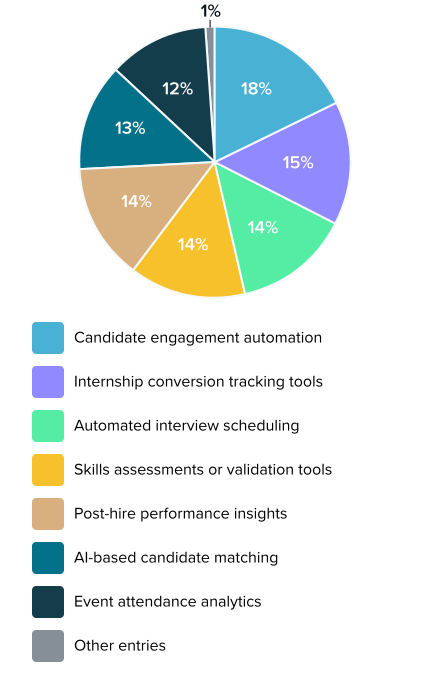
When asked what they’d invest in if budget weren’t a constraint, the answers reveal exactly where the gaps are — and which efforts have already proven their value.
If budget were not a factor, which capabilities would you invest in first?
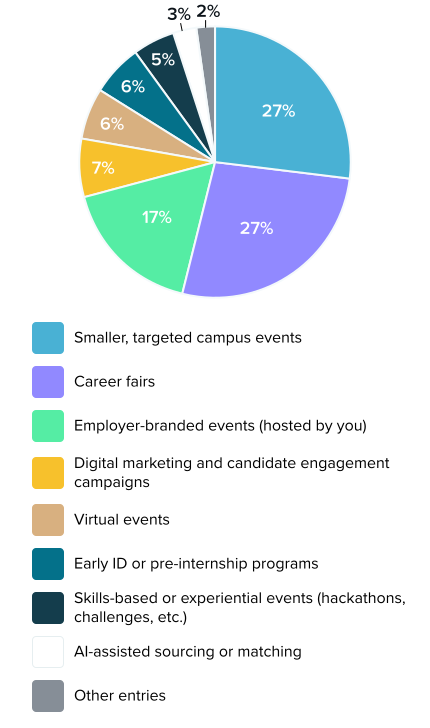
Which campus recruiting efforts delivered the strongest ROI for your team in the past year?
Challenges, Goals, and Strategy
What's standing in the way — and how teams are responding.
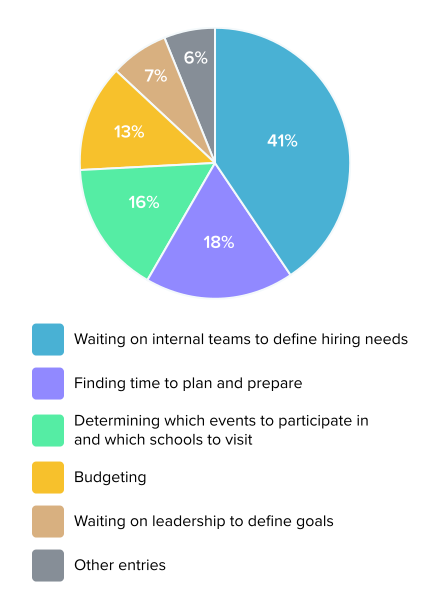
Campus recruiting teams are clear on what they want to achieve… but many don’t know how to do it with limited budgets, stretched teams, and a hiring process full of bottlenecks. Resources and bandwidth top the list of challenges, internal misalignment slows teams down before busy season even starts, and interviews and pipeline building remain the biggest operational bottlenecks.
What are your biggest campus recruiting challenges?
And even when recruiting goes well, the work isn’t done. Converting interns to full-time roles and keeping candidates engaged through to day one are challenges that follow teams well past the offer stage.
What is your biggest challenge when planning and preparing for busy season?
How have you adjusted your strategy to address these challenges?
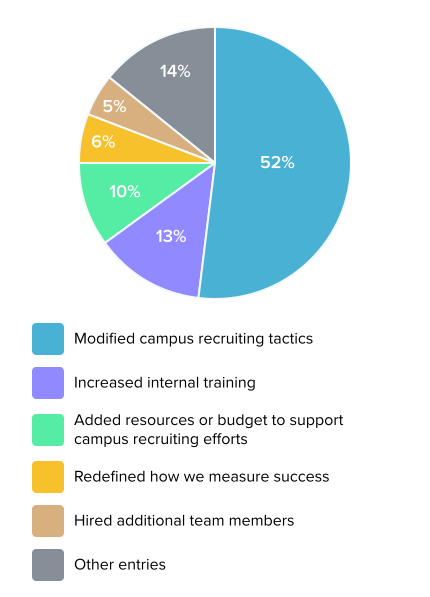
Does attending 150 campus events really matter if only 50 of them lead to quality hires? Teams are shifting from activity-based planning to outcome-based strategy.
9%
of interns who accepted an offer ultimately reneged before day one — and in a tight labor market, even a single renege can derail a team's hiring plan for the season.
So where are teams focusing their energy? The priorities for 2026 reflect a shift toward proving outcomes over accumulating activity.
What are your biggest challenges in managing intern engagement and conversion?
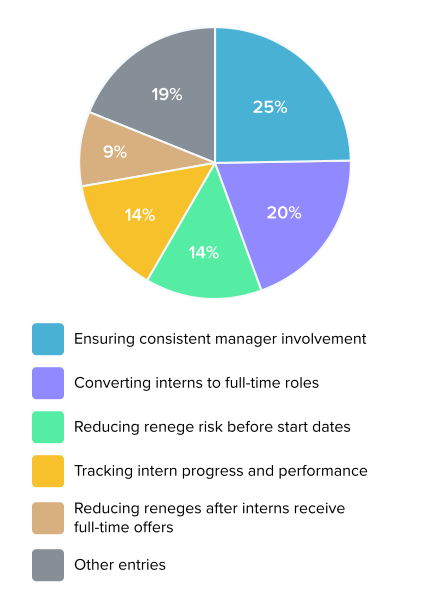
Which initiatives are you prioritizing most for 2026?
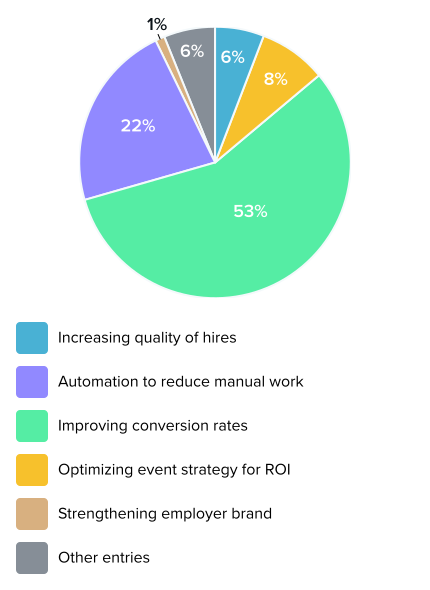
Which part of the early-career hiring process is your biggest bottleneck?
How have your goals for campus and early-talent events changed in the past year?
The shift from activity to outcomes is already underway, but without the right tools and data, most teams are navigating it blind.
Your leadership wants ROI data.
Yello helps you deliver it.
Internship conversion rates, event effectiveness, offer acceptance — Yello tracks the metrics executives actually care about, so you're not scrambling to pull numbers from spreadsheets before your next review.
Methodology
The data in this report was collected during Yello’s annual State of Campus Recruiting Survey. This year, we collected data from hundreds of campus recruiters, early talent leaders, and National Intern Day submissions. This year’s survey was open from December 2025 to February 2026.
Roughly how many employees work for your organization?
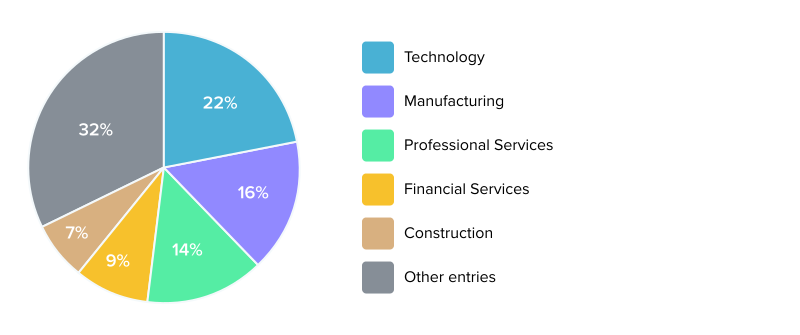
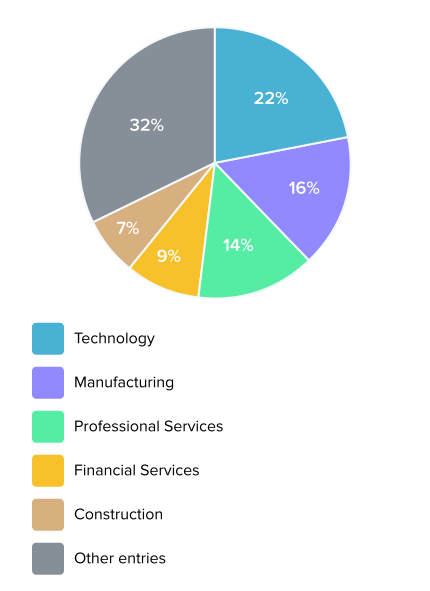
What industry is your organization in?
About Yello
The challenges in this report are hardly new, but the pressure to solve them has never been greater. Campus teams are managing more applications, operating with manual processes, and being asked to prove ROI with data they don’t have. Yello was built for this exact moment.
Yello is the only campus recruiting platform purpose-built for the volume, pace, and complexity of early talent hiring. From event management and candidate engagement to interview scheduling, data, and ROI, Yello gives teams the tools to stop guessing and start proving. Yello automates the manual work that strains your team most, so that your recruiters can spend less time on admin work and more time building candidate relationships that matter.
Hundreds of employers use Yello to run smarter programs, make faster decisions, and demonstrate the impact of their work to leadership.

